Showing posts with label King Jeongjo. Show all posts

Friday, October 26, 2018

Suwon Hwaseong Fortress (UNESCO World Heritage)


Suwon Hwaseong Fortress was constructed by king Jeongjo (reigning 1777~1800), the 22nd king of Joseon dynasty (1392-1910) after moving the tomb of his father Sadoseja, Crown Prince, who had been victimized in faction struggles in the court, and put inside a rice chest and had died in it, from Mt. Baebong, Yangju, to Mt. Hwa, Suwon. and the moving of the local government headquarters from near Mt. hwa to the current location under Mt. Paldal, Suwon. The mountain was considered as the best place to build tombs according to the theory of geomancy in those days.


There were multiple reasons for constructing the Suwon Hwaseong Fortress. The most important reason was King Jeongjo's filial piety to his father. But, there were other reasons: his political strategy to eradicate faction struggles and establish the king-led politics; use of it as a fortress of national defense to the south.


Using Seonghwajuryak (1793) written by Jeong Yak Yong, government official at Gyujanggak, referring to technology books of the East and the West as the guidebook, the fortress started to be constructed in January 1794, and was completed in September 1796 under the general supervision of Chae Jae Gong, former prime minister and then yeongjungchubusa, and the direction of Jo Sim Tae.


In the process of constructing it, new machines like geojunggi and nokro was specifically designed to move and pile up big stones. When the fortress was built, many subsidiary facilities such as Hwaseong Haenggung, Jungposa, Neposa, and Sajikdan, etc. were also built. But, most of them have been destroyed in later wars and riots, except for Naknamheon, part of Hwaseong Haenggung. Passing though the Japanese Occupation Era (1910~1945), and the Korean War (1950~1953), parts of the fortress were destroyed or lost. But, during the period of 1975~1979, most of the destroyed or lost parts were repaired and recovered, referring to Hwaseong Seongyeok Euigwae.


The circumference of the fortress is 5,744m, and its area is 130ha. It is a pyeongsanseong, or flat and mountainous fortress, with its eastern part flat, and its western part straddling Mt. Paldal. There were originally 48 facilities in the fortress: 4 munru, gate tower; 2 sumun, watergate; 3 gongsimdon, gun-shooting tower; 2 jangdae; 2 nodae, arrow-shooting towers; 5 poru, tower on the wall; 4 gakru; 5 ammun, open gate on the wall; 1 bongdon, or beacon tower, 4 jeokdae, watchtower; 9 chiseong, protective facilities on the wall; and 2 eungu. Among them, 7 facilities have disappeared by floods or wars, and 41 remain intact.


The fortress walls of Suwon Hwaseong remain intact almost as the original form as it was constructed 200 years ago. The Suwoncheon River, which flowed through Buksumun (or Hwahongmun) watergate, still flows through the watergate, and the road network linking Paldalmun, Janganmun, Hwaseong Haenggung, and Changrongmun are still used as an important part of the road network of current Suwon city. The construction of the fortress was motivated by political and economic purposes as well as the filial piety of the king to his father, rather than by military one. Thus, the fortress can be said to symbolize "hyo," filial piety, part of East Asian philosophy, and so it has spiritual and philosophical value, in addition to cultural one.


The Suwon Hwaseong Fortress is of a pyeongsanseong, or flat and mountainous fortress, which cannot be found in other neighboring countries like China and Japan. It was constructed for dual functions ― military defense and commercial functions. With its scientific, rational, and practical structures, it can be called the finest among the fortresses in Asia. The walls were piled up applying the method of 'owechuknetak' in which while outer walls were piled up, the inner sides were made by raising the grounds using the natural topographical features. Influenced by the silhak which literally meant practical studies, and was the scholastic and social movement in those days to try to find practical challenges in real life of people avoiding unrealistic philosophical controversies in neo-Confucianism, various kinds of advanced technology ― mixed use of bricks and stones; device of hyeonan, or flutes on the wall to pour hot water to enemy soldiers climbing the wall, and nujo, or gutter on the wall; creation of geojunggi, or crane; and wall-piling up with wood and bricks ― were actively applied in constructing the fortress. It can be regarded as a rare superb example of fortress construction technology of Asian fortresses.


Especially, the fortress, the result of the fortress construction technologies of the East and the West based on sufficient researches and meticulous plans, is very important in the respect of architectural history. Hwaseong Seongyeok Euigwae published in 1801 after the fortress had been completed provides detailed descriptions about personal informations of those workers who participated in the project, sources and uses of various materials, calculation of budgets and wages, various machines used, the methods of processing materials, and construction diary, as well as the blueprint of construction, and related institutions and rules. So, the book is evaluated as having left an important footprint in architectural history, specifically on fortress building, and having a big historical value as records themselves.


The Suwon Hwaseong Fortress was designated as the Historical Remains No. 3, and has been managed as such. As subsidiary cultural assets, it has Paldalmon gate (Treasure No. 402), Hwaseomun gate (Treasure No. 403), Janganmun gate, and Gongsimdon, etc. The Suwon Hwaseong Fortress was chosen to be registered as an UNESCO World Heritage in December 1997.


Viewing Hours
Summer Season(March~October) : 09:00~18:00
Winter Season(November~February) : 09:00~17:00
Suwon Hwaseong Fortress is operated in throughout the year and Suwon Hwaseong Fortress is no limit in visiting hours. But from 9:00am to 6:00pm(Winter Seaseon 5:00pm), there's entrance fee. After 6:00pm((Winter Seaseon 5:00pm), you may enter Suwon Hwaseong Fortress free of charge.

Price
Adults 1,000won / Youth 700won / Children 500won

Information on Transportation


Monday, October 1, 2018

The 55th Suwon Hwaseong Cultural Festival

Built by King Jeongjo for his father, Crown Prince Sado, Suwon Hwaseong Fortress was designated as a UNESCO World Heritage. Each fall, the “Suwon Hwaseong Cultural Festival” reflects upon the filial piety of King Jeongjo and also, his thoughts on reforms for his subjects which shines through in Hwaseong Fortress. A variety of performances and activities will be available at this year’s Festival led by the ‘King Jeongjo Tomb Parade Reenactment,’ the highlight of the “Suwon Hwaseong Cultural Festival,” as well as a reenactment of the ‘Jinchanyeon (60th birthday) Banquet for Crown Princess Hong’, and the ‘Suwon Lantern of Love Festival’ which will take place along the beautiful Suwoncheon. For three days between October 5 (Fri) and 7 (Sun) in 2018, visitors can come and enjoy various events in “culture city” Suwon and experience life as it was during the Joseon Dynasty.


  • period : October 5 (Fri) ~ October 7 (Sun), 2018
  • place : Suwon Hwaseong Fortress area including the Hwaseong Haenggung Temporary Palace Plaza, Suwoncheon, Gukgung archery range
  • key programs : Jinchanyeon (60th birthday) Banquet for Crown Princess Hong, evening martial arts program, King Jeongjo Tomb Parade Reenactment, etc.


Sunday, September 10, 2017

2017 King Jeongjo Tomb Parade Reenactment


In September 2017, the three cities of Suwon, Seoul, and Hwaseong will come together for the ‘King Jeongjo Tomb Parade Reenactment.’ In past years, Suwon City had organized the King Jeongjo Tomb Parade on its own. The Parade traditionally reenacted the King’s royal procession in the year of Eulmyo (1789) as he paid his respects to his father, Crown Prince Sado. This year, however, is the first time for the Parade to reenact the entire route of King Jeongjo’s royal procession which begins in Changdeokgung Palace in Seoul, passes Suwon Hwaseong Haenggung Temporary Palace, and ends at the Yungneung in Hwaseong. With this complete route, the entire Parade will incorporate Changdeokgung Palace, Suwon Hwaseong Fortress, and Yungneung which bears witness to King Jeongjo’s filial piety. Also, the size of this year’s reenactment will be the largest-ever with a total length of 59.2km, total participating personnel of 4,210 persons, and 720 horses.


  • Event Duration: September 23 (Sat) ~ September 24 (Sun), 2017 
  • Procession Location: Changdeokgung Palace (Seoul) - Siheung Haenggung Temporary Palace - Changanmun Gate - Yeonmudae - Yungneung
  • Admission: Free
  • Website : http://www.kingjeongjo-parade.kr/2017/?lang=en


The 54th Suwon Hwaseong Cultural Festival


Built by King Jeongjo for his father, Crown Prince Sado, Suwon Hwaseong Fortress was designated as a UNESCO World Heritage. Each fall, the “Suwon Hwaseong Cultural Festival” reflects upon the filial piety of King Jeongjo and also, his thoughts on reforms for his subjects which shines through in Hwaseong Fortress. A variety of performances and activities will be available at this year’s Festival led by the ‘King Jeongjo Tomb Parade Reenactment,’ the highlight of the “Suwon Hwaseong Cultural Festival,” as well as a reenactment of the ‘Jinchanyeon (60th birthday) Banquet for Crown Princess Hong’, and the ‘Suwon Lantern of Love Festival’ which will take place along the beautiful Suwoncheon. For three days between September 22 (Fri) and 24 (Sun) in 2017, visitors can come and enjoy various events in “culture city” Suwon and experience life as it was during the Joseon Dynasty.


  • Festival Duration: September 22 (Fri) ~ September 24 (Sun), 2017 
  • Festival Venue: Suwon Hwaseong Fortress and surrounding areas 
  • Key Programs: Jinchanyeon (60th birthday) Banquet for Crown Princess Hong, evening martial arts program, King Jeongjo Tomb Parade Reenactment, etc.
  • Website : http://shcf.swcf.or.kr/ 


Thursday, July 14, 2016

Invitation to King Jeongjo Tomb Parade Reenactment


Marking the 220th anniversary of erecting Suwon Hwaseong Fortress, the City of Seoul and the City of Suwon will hold a King Jeongjo’s Parade Reenactment from Changdeokgung Palace to Hwaseong Haenggung Palace on October 8~9.
The event will reenact the parade done by the king in 1795.
We invite civil participants to this parade.

application period : July 14, 2016 ~ August 10, 2016
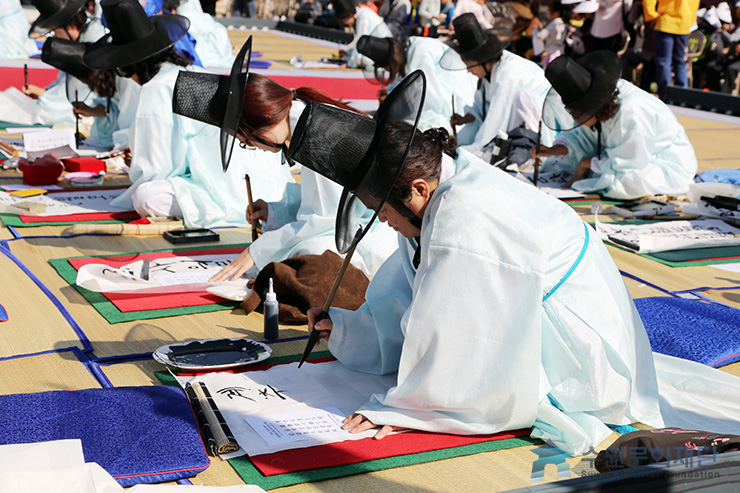


Sunday, September 20, 2015

The 52nd Suwon Hwaseong Cultural Festival Schedule - Main Program


The largest festival in Korea for traditional cultural tourism gets under way in Suwon every autumn! The ‘Suwon Hwaseong Cultural Festival’ is back!
Suwon Hwaseong Cultural Festival celebrates the 52nd annual event this year since hosting its inaugural event in 1964. This year’s Festival is scheduled for 4 days between October 8 and 11, 2015.
The Festival will feature reenactments of traditional events such as the royal procession of King Jeongjo the Great to his father’s tomb, the highlight of the Suwon Hwaseong Cultural Festival, and Crown Princess Hong’s ‘Jinchanyeon’ (60th birthday celebration) as well as a night time martial arts performance using Suwon Hwaseong Fortress as a backdrop and the Banghwasuryujeong Moonlight Music Concert.
In particular, this year’s Suwon Hwaseong Cultural Festival has plenty of programs where guests can participate. The Festival will also have a food culture festival where guests can taste traditional cuisine from countries such as Korea, China, and Japan.
This October, get ready for a 4-day trip to World Heritage Site Suwon Hwaseong Fortress and meet King Jeongjo the Great in the Joseon Dynasty!


- The 52nd Suwon Hwaseong Cultural Festival Main Program -


Opening Ceremonies & firework
[10. 8(THU)19:30~21:00/Hwaseong Fortress Yeommudae]
The performance and firework that wishing for the year of 2015 Suwon Hwaseong Cultural Festival’s success


Jeongjo’s Royal parade
[10. 9(FRI)14:00~17:00/Hwaseong Fortress Area]
The revival of 22nd king of Joseon Jeongjo's Royal parade to his Father's Tomb which is the highlight of the festival


Martial Arts Performance
[10. 10(SAT)20:00~21:30/Hwaseong Fortress Yeommudae]
The night performance that turning Jangyongyeong Royal Guards of King Jeongjo’s night training into liveliness of horseback martial art and fancy art.


Queen Hyegyeonggung Hong's 60th Birthday Feast
[10. 11(SUN)10:00~12:00/Bongsudang in Hwaseong Haenggung]
The revival of Queen Hyegyeonggung Hong, on her 60th birthday and you can feel a sense of royal play.


Website >


Wednesday, June 24, 2015

The 52nd Suwon Hwaseong Cultural Festival


The largest festival in Korea for traditional cultural tourism gets under way in Suwon every autumn! The ‘Suwon Hwaseong Cultural Festival’ is back!


Suwon Hwaseong Cultural Festival celebrates the 52nd annual event this year since hosting its inaugural event in 1964. This year’s Festival is scheduled for 4 days between October 8 and 11, 2015.


Over the years, Suwon Hwaseong Festival has become established as a quintessential regional cultural festival that promotes the traditional culture and tourism of Suwon.


The Festival will feature reenactments of traditional events such as the royal procession of King Jeongjo the Great to his father’s tomb, the highlight of the Suwon Hwaseong Cultural Festival, and Crown Princess Hong’s ‘Jinchanyeon’ (60th birthday celebration) as well as a night time martial arts performance using Suwon Hwaseong Fortress as a backdrop and the Banghwasuryujeong Moonlight Music Concert.

In particular, this year’s Suwon Hwaseong Cultural Festival has plenty of programs where guests can participate. The Festival will also have a food culture festival where guests can taste traditional cuisine from countries such as Korea, China, and Japan.


This October, get ready for a 4-day trip to World Heritage Site Suwon Hwaseong Fortress and meet King Jeongjo the Great in the Joseon Dynasty!


[The 52nd Suwon Hwaseong Cultural Festival]